



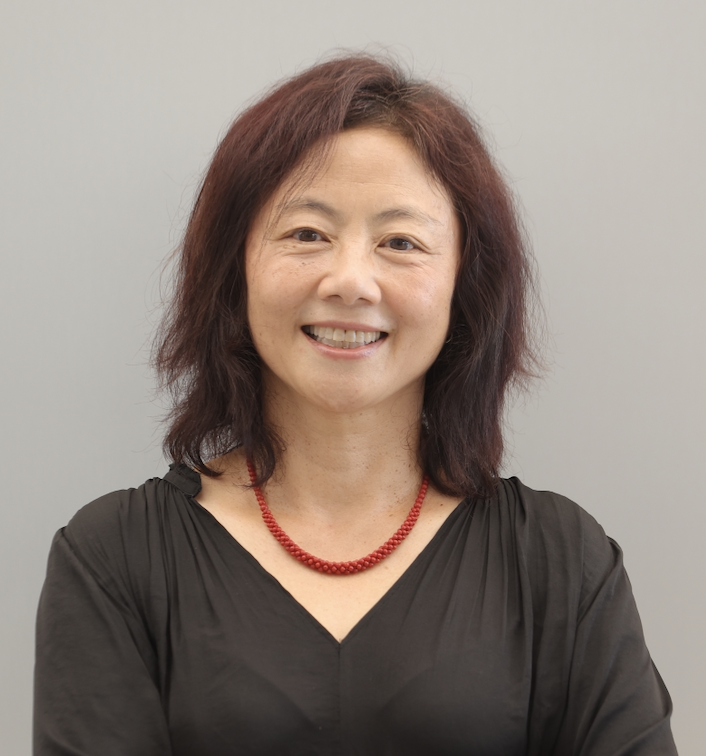
Dr. Meijie Tang
Deputy Director of HKU Technology Transfer Office (TTO)
Director of MILES Technology Translation Center (TC)
Office: MB214, Main Building, The University of Hong Kong, Pok Fu Lam Road, Hong Kong
Email: mjtang@hku.hk
Professional Summary
Serial entrepreneur, materials scientist, and technology translation leader with a Ph.D. in Materials Science / Nuclear Engineering from MIT and 10+ years of experience launching and scaling high-tech startups across the U.S., Hong Kong, and mainland China. Co-founded and led multiple startups in both biotech and new battery/energy materials, with successful exits and acquisitions—including the acquisition of a POCT medical diagnostics company by Sansure Biotech. As co-founder and former CEO & President of a Stanford spin-off, achieved FDA Class II medical device clearance, ISO 13485 certification, and global commercialization of in vivo imaging and diagnostic products.
Currently Deputy Director of the Technology Transfer Office at The University of Hong Kong and Director of the MILES Technology Translation Center at HKU, leading cross-border commercialization, IP strategy, business development strategy, and a RMB 100M seed fund initiative. Advisor and angel investor in the Stanford and MIT accelerator ecosystems, with exposure to 1,000+ early-stage companies.
Expertise spans startup formation, fundraising, commercialization strategy, team building, product development and scale-up, patent/IP strategy, licensing, clinical and regulatory pathways, and new energy materials commercialization.
Education
Ph.D. in Materials Science / Nuclear Engineering, Massachusetts Institute of Technology, Cambridge, MA — 1995
Physics, Tsinghua University, Beijing, China — 1990
Current Positions
Deputy Director, Technology Transfer Office, The University of Hong Kong — Since September 2023
Director, MILES (Materials Innovation Institute for Life Sciences and Energy) Technology Translation Center, The University of Hong Kong — Since September 2023
Professional Experience & Honors
Deputy Director, Technology Transfer Office, The University of Hong Kong — September 2023–Present
Director, MILES Technology Translation Center, The University of Hong Kong — September 2023–Present
CEO & President, Nirmidas Biotech, Inc., California, USA — January 2014–August 2023
MIT Industrial Liaison Program & Startup Exchange Program — 2015–Present
Advisor and Angel Investor, Stanford University StartX Accelerator — 2014–Present
Participant, Jansen Labs & QB3 Startup Program — 2014–2015
Project Manager, MIDAS Software Platform, Lawrence Livermore National Laboratory — 2011–2013
Staff Scientist, Lawrence Livermore National Laboratory — 1997–2013
Postdoctoral Fellow, Lawrence Livermore National Laboratory — 1995–1997
Sir Run Run Shaw Fellowship, MIT — 1992–1995
NSF Graduate Student Fellowship — 1993
Entrepreneurial & Industry Impact
Built and scaled multiple high-tech biotech startups in Silicon Valley and Hong Kong, with 10+ years of experience across company formation, fundraising, team building, product development, patent/IP strategy, and licensing in China, Hong Kong, and the U.S.
Serve as board directors for several high-tech startup companies leading and guiding developments in fundraising, business development, and commercialization.
Serve as advisor and angel investor to founders within the Stanford and MIT accelerator ecosystems, engaging with a broad network of 1,000+ early-stage companies.
Co-founded a Stanford spin-off in 2014 and led as CEO & President for 9+ years. Achieved FDA Class II medical device clearance, ISO 13485 certification, and global commercialization of infrared fluorescence in vitro diagnostics (IVD) and small animal vivo imaging systems and related products.
Co-founded a Shenzhen-based point-of-care testing (POCT) company in 2015 and served as Chairwoman of the Board. Developed nearly 100 IVD POCT tests, including 25 NMPA-approved and 60+ CE-marked products, growing revenues globally. The company was acquired by Sansure Biotech (圣湘生物) in 2026.
Co-project team member for HKU’s Raise+ project, “Guiding Clinical Surgery by Intraoperative Infrared Fluorescence Imaging,” secured up to a HKD 100M grant to develop a breakthrough clinical imaging system, including optical instruments and probes, with clinical trial and regulatory planning (e.g., IND, NDA with NMPA and FDA).
Lead MILES efforts to establish a RMB 100 million investment seed fund with a prominent GP, targeting 20+ early-stage startups from HKU and other universities/institutes originating from Hong Kong, mainland China, and the U.S.
Since October 2024, led the MILES team in engaging multiple legal patent firms and provided guidance/execution for PCT and internal patents in the U.S., Europe, and other international jurisdictions in new materials, new energy materials, new optical medical devices, and new drug candidates.
Core expertise includes legal/IP, financial, business development, product-market fit, team building, and fundraising strategies.
Specialized in medical devices, including in vitro diagnostics, new drug development, and research tools (instrumentation and consumables).
Scientific & Technical Contributions
Contributed to the development of a near-infrared fluorescence dye platform for optical-guided surgery.
Contributed to the creation of sensitive, multiplexed, portable diagnostic devices based on plasmonic fluorescence technology.
Led the development of innovative nanotechnology-based immunoassays for infectious disease diagnostics.
Conducted and pioneered dislocation dynamics simulations and multiscale modeling of metallic material plasticity and strength.
Investigated semiconductor materials and failure mechanisms at the nanoscale using parallel processing advanced computing methods.
Publications
Biomedical Diagnostics & Plasmonic Sensing
1. Liu, Y., et al. (2023). “Multiplexed discrimination of SARS-CoV-2 variants via plasmonic-enhanced fluorescence in a portable and automated device.” Nature Biomedical Engineering, 7(12), 1636–1648.
2. Rojas, A., et al. (2021). “Comparison of Anti-Dengue and Anti-Zika IgG on a Plasmonic Gold Platform with Neutralization Testing.” American Journal of Tropical Medicine & Hygiene, 104(5), 1729. doi: 10.4269/ajtmh.20-1449
3. Gurbel, P.A., Tang, M., Dai, H., et al. (2021). “Evolution of Anti-SARS-CoV-2 IgG Antibody and IgG Avidity Post Pfizer and Moderna mRNA Vaccinations.” medRxiv.
4. Liu, T., et al. (2020). “Quantification of antibody avidities and accurate detection of SARS-CoV-2 antibodies in serum and saliva on plasmonic substrates.” Nature Biomedical Engineering.
5. Pomares, C., et al. (2017). “Validation of IgG, IgM multiplex plasmonic gold platform for Toxoplasma gondii.” Diagnostic Microbiology & Infectious Disease.
6. Zhang, B., et al. (2017). “Diagnosis of Zika virus infection on a nanotechnology platform.” Nature Medicine, 23(5), 548–550.
Materials Science & Dislocation Dynamics
7. Tang, M., & Marian, J. (2014). “Temperature and high strain rate dependence of tensile deformation in single-crystal iron from dislocation dynamics simulations.” Acta Materialia, 123–129.
8. Yang, L.H., Tang, M., & Moriarty, J.A. (2010). “Dislocations and plasticity in bcc transition metals at high pressure.” Dislocations in Solids.
9. Rao, S.I., et al. (2008). “Size-dependent crystal flow from 3D dislocation simulations.” Acta Materialia.
10. Rao, S.I., et al. (2007). “Strength estimation of dislocation sources in micron-sized crystals.” Philosophical Magazine.
11. Arsenlis, A., et al. (2007). “Enabling strain hardening simulations with dislocation dynamics.” Modelling and Simulation in Materials Science and Engineering.
12. El-Azab, A., et al. (2007). “Statistical characterization of dislocation ensembles.” Philosophical Magazine.
13. Bulatov, V.V., et al. (2006). “Dislocation multi-junctions and strain hardening.” Nature, 440(7088), 1174–1178.
14. Tang, M., et al. (2006). “Hybrid force computation for curved dislocations in 3D.” Modelling and Simulation in Materials Science and Engineering.
15. Tang, M., Cai, W., Xu, G., & Bulatov, V.V. (2006). “A hybrid method for computing forces on curved dislocations intersecting free surfaces in three-dimensional dislocation dynamics.” Modelling and Simulation in Materials Science and Engineering.
16. Yang, L.H., Tang, M., & Moriarty, J.A. (2001). “Multiscale modeling of dislocation processes in BCC tantalum: Bridging atomistic and mesoscale simulations.” MRS Online Proceedings Library.
17. Tang, M. & Kubin, L.P. (2001). “Boundary conditions for dislocation dynamics simulations and stage 0 of BCC metals at low temperature.” MRS Online Proceedings Library.
Computational Physics
18. Tombler, T.W., et al. (2000). “Reversible electromechanical characteristics of carbon nanotubes under local-probe manipulation.” Nature, 405(6788), 769–772.
19. Liu, L., et al. (2000). “Reversibility of sp² to sp³ transition in nanotubes.” Physical Review Letters, 84(21), 4950–4953.
20. Tang, M. & Yip, S. (1995). “Brittle fracture of β-SiC (polytype 3C) under hydrostatic tension: molecular dynamics simulation.” Journal of Applied Physics, 2719–2725.
21. Tang, M., et al. (1995). “Atomic size effects in pressure-induced amorphization of a binary covalent lattice.” Physical Review Letters, 2738–2741.
22. Tang, M. & Yip, S. (1994). “Molecular dynamics simulation of brittle fracture in β-SiC.” Journal of Applied Physics.